An organic single-active-ingredient formula
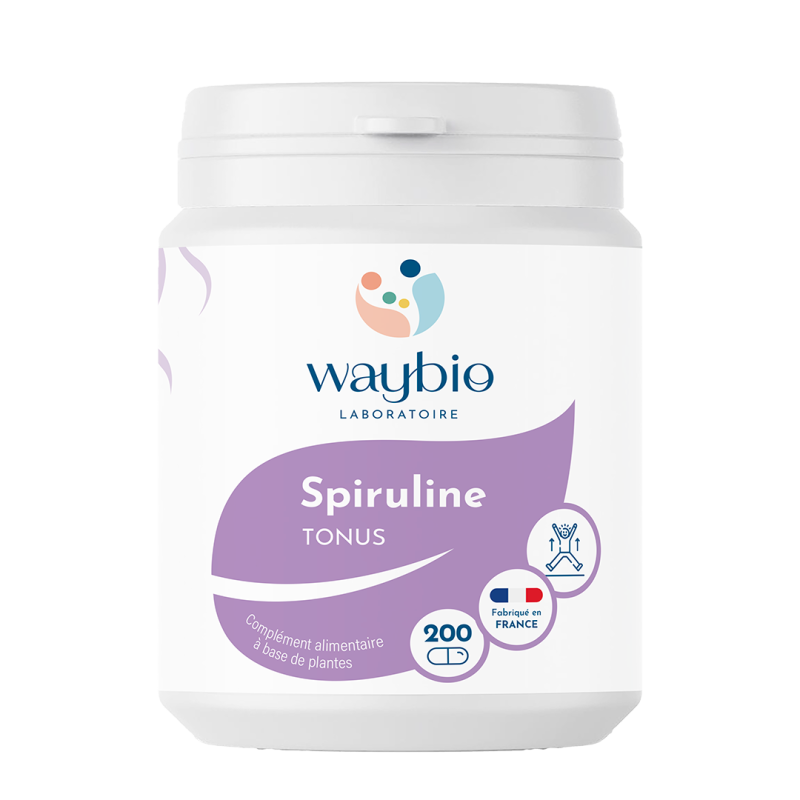
Spiruline offers a deliberately simple formula composed of a single active ingredient: organically grown Spiruline. The maximum recommended intake, namely six capsules per day, provides 1,800 mg of Spiruline.
Often described as a blue-green microalga, Spiruline is more precisely a photosynthetic cyanobacterium. Its characteristic colour comes notably from phycocyanin, a blue pigment, together with chlorophyll and various carotenoids. Species intended for food belong to the genera Arthrospira or Limnospira.
Protection against oxidative stress
Cells naturally produce reactive molecules during energy production, immune activity or physical exertion. In controlled quantities, these molecules contribute to the body’s normal functioning. When they become too numerous in relation to the available defences, oxidative stress occurs.
This excess oxidation can notably affect the lipids that make up cell membranes, as well as proteins and genetic material. To protect itself, the body has several systems, including glutathione and enzymes such as superoxide dismutase and catalase.
Spiruline supports this balance through the diversity of its pigments and naturally antioxidant compounds. It therefore helps the body better cope with the consequences of oxidative stress, particularly when the production of reactive molecules increases.
Phycocyanin, Spiruline’s emblematic pigment
Phycocyanin is a blue pigment protein used by Spiruline to capture light energy. It contains a coloured component called phycocyanobilin, which can interact with certain oxidising molecules.
Physiologically, phycocyanobilin may contribute in two complementary ways:
• by directly neutralising certain reactive species before they damage cellular structures;
• by modulating enzymes involved in their formation, notably NADPH oxidase.
Phycocyanin also contributes to maintaining internal antioxidant defences, which notably rely on glutathione, superoxide dismutase and catalase. It is therefore one of the main compounds explaining Spiruline’s value in protection against oxidation.
Complementary carotenoids
Spiruline generally contains carotenoids, including beta-carotene and zeaxanthin. Unlike phycocyanin, which is water-soluble, these pigments have an affinity for lipid-rich environments.
They can notably neutralise singlet oxygen, a highly reactive form of oxygen, and help protect membrane lipids against oxidation reactions. Chlorophyll and certain phenolic compounds complete this pigment matrix.
A naturally diverse biomass
Whole Spiruline generally has a high protein density and provides various amino acids. These are used for the production and renewal of the body’s proteins, notably those found in muscles, enzymes and tissues.
Its biomass may also contain fatty acids, polysaccharides and various minerals.
Its main value here lies in the supply of organic Spiruline and the diversity of its antioxidant pigments.
An ancient food source
Spiruline consumption is not a recent practice. Harvests of cyanobacteria intended for food have notably been described around Lake Texcoco in Mexico, as well as in the Lake Chad region, where they are traditionally made into dried cakes called dihé.
Modern production generally reproduces the conditions favourable to its development: alkaline water, light, heat and a controlled supply of nutrients. After cultivation, the biomass is usually harvested by filtration, washed, concentrated, dried and then ground into powder before being placed in capsules.
A formula suited to demanding periods
Physical activity temporarily increases oxygen consumption and the production of reactive molecules. When exercise is intense or repeated in quick succession, the balance between their production and antioxidant defences may be placed under greater strain.
Spiruline can therefore support active people or athletes wishing to supplement their diet with a natural source of antioxidant pigments. It may also be relevant during periods with a demanding pace, when the body is exposed to a greater oxidative load.
This formula stands out for:
• a single active ingredient;
• 1,800 mg of Spiruline per six capsules;
• organically grown Spiruline;
• a presentation in vegetable capsules;
• a pack of 200 capsules.
Who is this product for?
This Spiruline may be particularly suitable for:
• people wishing to increase their intake of naturally antioxidant compounds;
• people who are physically active or regularly practise sport;
• during periods of repeated exertion or a demanding pace of life;
• people looking for an organic single-active-ingredient formula;
• those who prefer a convenient presentation in vegetable capsules.
What does the science say?
In 2022, a team mainly based in Rennes, France, sought to determine whether Spiruline supplementation could modify the body’s response after particularly intense physical exertion.
The trial involved 17 elite-level male rugby players. Participants were assigned randomly and double-blind to two groups:
• nine players received 5.7 g of Spiruline platensis per day as a supplement;
• eight players received a placebo providing a comparable amount of calories and protein.
Supplementation lasted seven weeks. Before and after this period, the players completed a level 2 Yo-Yo Intermittent Recovery Test, an exercise made up of repeated runs at increasing intensity until exhaustion.
Blood samples were taken before exercise, immediately afterwards and then 24 hours later. The researchers notably measured:
• F2-isoprostanes, which reflect lipid oxidation;
• C-reactive protein or CRP, a marker of the inflammatory response;
• creatine kinase or CK, an enzyme used as an indicator of muscular strain and damage.
Immediately after exercise, these three markers increased significantly only in the placebo group: p < 0.05 for F2-isoprostanes, p < 0.05 for CRP and p < 0.001 for CK. No comparable increase was observed in the group receiving Spiruline.
Twenty-four hours after exercise, F2-isoprostane, CRP and CK values were even lower than those measured before exercise in the Spiruline group, with respectively p < 0.05, p < 0.01 and p < 0.001.
These results indicate that a daily intake of Spiruline supported the management of lipid oxidation and the recovery of certain markers after exhaustive exercise in high-level male athletes.





 Tone
Tone
.png) Expertise based on experience and science
Expertise based on experience and science.png) Certified products
Certified products The best of nature