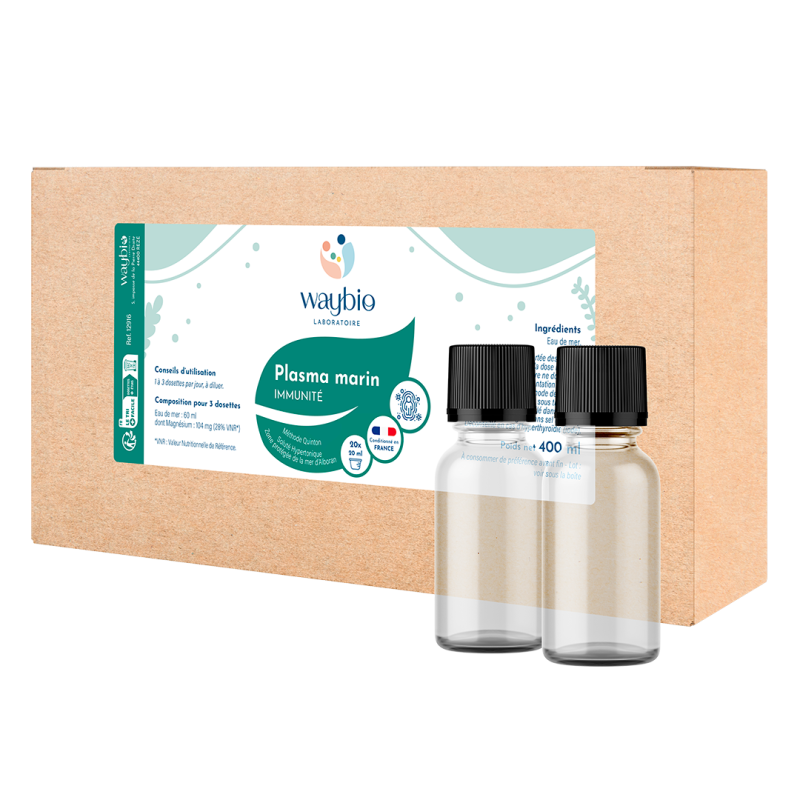
Plasma marin is a
hypertonic seawater with a
total mineralisation of 39 g/L. It is packaged in
20 ampoules of 20 ml, for a total volume of 400 ml, making it easy to dose and carry.
The water is drawn from the
Alboran Sea,
1,300 metres from the coast (to avoid maritime traffic) and at a
depth of 38 metres (to avoid pollutants). The
Cabo de Gata-Níjar area, located on this coastline, has been recognised as a
UNESCO Biosphere Reserve since 1997 and includes a protected marine area characterised by its volcanic geology and preserved Mediterranean seabed.
A significant magnesium intakeThe formula provides
104 mg of magnesium per 60 ml, or approximately 27.7% of the European nutrient reference value. One 20 ml ampoule provides approximately
34.7 mg, or 9.2% of this reference value.
Magnesium is involved in
more than 300 enzyme systems. It notably participates in reactions that enable cells to
convert carbohydrates and lipids into usable energy. It is also involved in mineral exchanges across cell membranes and in regulating the movement of potassium and calcium.
Through these functions, magnesium contributes to:
•
reducing tiredness and fatigue;
•
normal energy-yielding metabolism;
•
electrolyte balance;
• the
normal function of the nervous system;
• the
maintenance of normal muscle function;
•
normal psychological function;
•
normal protein synthesis;
• the
maintenance of bones and teeth.
These functions correspond to claims authorised by the European Union. They are particularly relevant at the maximum daily dose for Waybio, which provides
104 mg of magnesium.
This magnesium is
naturally bioavailable. It is present in
dissolved form in seawater.
A natural electrolyte matrixPlasma marin also naturally contains
sodium, potassium and other trace elements.
Sodium contributes to the
distribution of water between the body’s different compartments and to fluid and electrolyte balance. Sodium and potassium are also involved in the
electrical signals used by nerves and muscles. In particular, they enable muscle fibres to receive a nerve signal and then contract.
This marine matrix can therefore have a place during periods when mineral requirements are under greater demand, for example during
physical activity, heavy perspiration or demanding recovery.
A moderate iodine intakeThe solution provides
4.6 µg of iodine per 60 ml. Iodine is essential for the
production of thyroid hormones, which help regulate metabolic activity and the body’s use of energy. It also contributes to the
normal function of the nervous system and the
maintenance of cognitive function.
Why dilute a hypertonic solution?The solution contains
39 g of mineral matter per litre, which explains its hypertonic nature. Such a concentrated solution exerts
greater osmotic pressure than ordinary water.
The recommended dilution —
one part solution to three parts spring water — divides the mineralisation by four. It therefore results in a calculated concentration of approximately
9.75 g/L. This preparation is described as “isotonic”. Here, this term indicates a solution that is considerably less concentrated than the original product.
Microfiltration without heatingThe water
is not heated. It undergoes
cold microfiltration through a 0.22 µm membrane. This mechanical process is designed to retain particles and microorganisms corresponding to the filter size, while leaving dissolved minerals in the solution. The formula contains
no additives or preservatives.
Our product is
free from heavy metals, pesticides, herbicides and other pollutants.
What does “Quinton method” mean?This term refers to
René Quinton’s historical work on seawater and the internal environment. His book
L’eau de mer, milieu organique was published in Paris in
1904. On this page, the expression refers to
concentrated seawater, prepared cold and suitable for dilution before consumption. “Plasma marin” is a historical name: the product contains
seawater only, not blood plasma.
Who is this product for?This marine solution may be particularly suitable for:
• people looking for a
mineral supplement during a period of temporary fatigue;
• adults whose
dietary magnesium intake is insufficient or irregular;
• active people wishing to support their
muscle function and recovery;
• athletes wishing to supplement their
hydration strategy and electrolyte intake;
• people going through a
demanding period, when the nervous system and energy metabolism are under greater strain;
• users seeking a
marine solution in individual portions that is easy to carry and dose.
What does the science say?A
clinical study published in 2017 examined the effect of a small amount of microfiltered and sterilised seawater on the response to
prolonged exercise performed in the heat.
The trial, conducted in Spain as part of a protocol affiliated with the
University of Alicante, involved
12 experienced male runners. Their average age was 32, and their aerobic capacity indicated a good level of training.
The study followed a
randomised, crossover, double-blind protocol. Each participant therefore tested both conditions, separated by seven days:
•
50 ml of microfiltered and sterilised seawater;
•
50 ml of pure water used as a placebo.
The drink was consumed
five minutes before a treadmill run. The runners exercised at 40% of their maximum aerobic capacity in a room maintained at
30°C until they had lost
3% of their body weight. The exercise lasted an average of
95 minutes. Blood lactate was measured regularly.
After exercise, the average lactate concentration reached:
•
2.275 ± 0.433 mmol/L with seawater;
•
3.375 ± 0.367 mmol/L with pure water.
The difference was
1.10 mmol/L, corresponding to a final value
approximately 33% lower with seawater. The statistical analysis estimated the average difference at between 0.912 and 1.288 mmol/L with a 95% confidence interval.
These results show that
acute seawater intake was associated with less lactate accumulation after exercise.
Reference: Pérez-Turpin JA, Trottini M, Chinchilla-Mira JJ, Cyganik W.
Effects of seawater ingestion on lactate response to exercise in runners.
Biology of Sport. 2017;34(4):407-412. DOI:
10.5114/biolsport.2017.70733.
Full text on PubMed Central





 Immunity
.png) Expertise based on experience and science
Expertise based on experience and science.png) Certified products
Certified products The best of nature