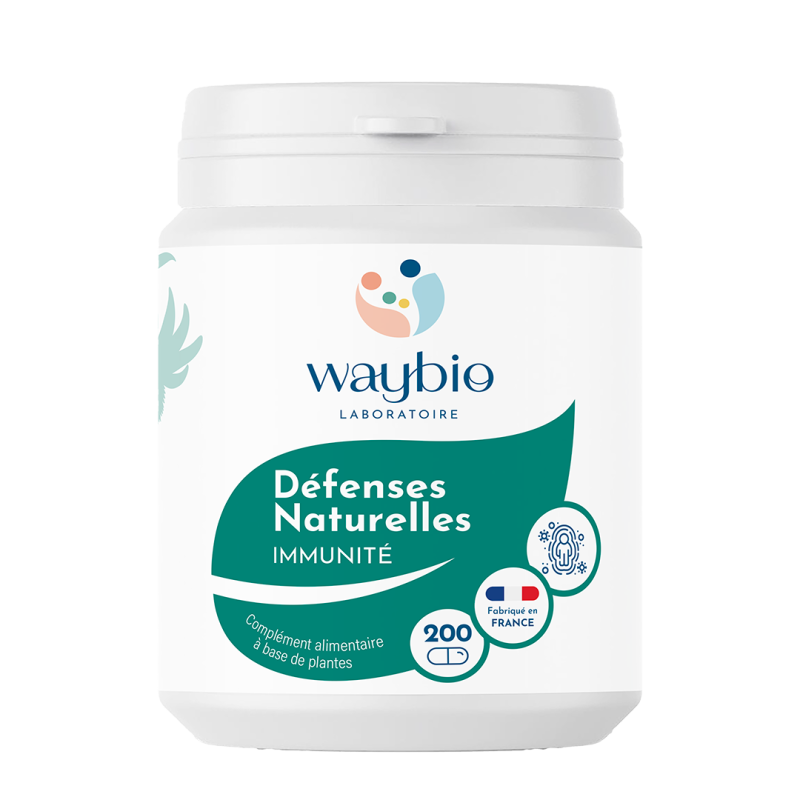
Défenses naturelles combines a plant traditionally used to support the body’s defenses with two mushrooms rich in compounds capable of interacting with immune cells. For six capsules, the formula provides 720 mg of echinacea root powder, 450 mg of shiitake (powder and extract) and 150 mg of reishi extract.
This combination is designed to provide a complementary action across the different stages of the immune response. The aim is not to “overactivate” the body, but to help maintain a response that is both reactive and well regulated. Effective defenses need to quickly recognize external elements, neutralize them and then return to a state of balance.
Echinacea, the main active ingredient in the formula
The formula provides 720 mg of Echinacea purpurea root powder. Native to North America, this plant is traditionally used to support Défenses naturelles, particularly during the winter months.
Its root contains several families of compounds:
• alkylamides;
• caffeic acid derivatives;
• polysaccharides;
• various phenolic compounds.
Alkylamides can interact with sensors found on certain immune cells. These sensors contribute to the regulation of their activity and adjustment of the production of chemical messengers involved in the defense response.
Physiologically, this translates into better coordination between sentinel cells and response cells. Echinacea thus helps the body trigger an appropriate response, neither insufficient nor excessive, when faced with external challenges.
Shiitake in two complementary forms
Shiitake, or Lentinula edodes, is a mushroom that has long been consumed in Asia. The formula provides 300 mg as powder and 150 mg as extract.
The powder retains all of the mushroom’s natural constituents, while the extract concentrates certain active fractions. As the extraction process is not specified, it is not possible to know precisely which compounds are enriched.
Shiitake contains polysaccharides, including beta-glucans. These molecules are recognized by immune surveillance cells, particularly macrophages and dendritic cells.
This recognition triggers several physiological effects:
• activation of defense cells;
• improved ability to engulf and eliminate foreign elements;
• enhanced communication between immune cells;
• coordination between the rapid response and the more specific response.
These mechanisms contribute to greater overall effectiveness of the body’s first line of defense.
Reishi to support a balanced immune response
Reishi, or Ganoderma lucidum, is a mushroom traditionally used in Asia to support the body’s resilience during periods of stress or fatigue.
It contains two main families of compounds:
• polysaccharides, including beta-glucans;
• triterpenes.
The polysaccharides interact with immune surveillance cells and contribute to their activation. They therefore support the early stages of the defense response.
Triterpenes contribute to adjusting the intensity of the immune response. They participate in the balance between activation and a return to calm, particularly by influencing the internal mechanisms that regulate inflammation.
Reishi therefore complements the action of echinacea and shiitake by adding a dimension of balance and adaptation to the body’s overall response.
Plant and mushroom synergy
The combination is based on complementary mechanisms:
• echinacea supports coordination between defense cells and helps trigger an appropriate response;
• shiitake reinforces recognition of foreign elements by surveillance cells;
• reishi contributes to the overall balance of the response and its adjustment over time.
These three ingredients act at different levels of the immune response: detection, activation and regulation. Together, they are designed to support effective yet controlled defenses.
Who is this product for?
Défenses naturelles may be particularly suitable for:
• adults and adolescents aged 12 and over who wish to support their Défenses naturelles;
• seasonal changes, particularly in autumn and winter;
• periods of fatigue or a demanding pace;
• people exposed to group environments;
• those looking for a combination of an immune-supporting plant and mushrooms;
• as part of an overall healthy lifestyle including sleep, a balanced diet and physical activity.
What science says
A British study published in 2012 evaluated the prolonged use of an Echinacea purpurea preparation in adults prone to seasonal respiratory tract infections.
Conducted at Cardiff University, this randomized, double-blind, placebo-controlled trial included 755 healthy adults who usually experienced at least two colds per year. Their average age was approximately 24.
For four months, participants received either a liquid echinacea preparation or a placebo similar in appearance and taste.
The observed results showed:
• 149 cold episodes in the echinacea group compared with 188 in the placebo group;
• 672 cumulative days of symptoms compared with 850;
• fewer recurrent episodes and less medication use in the echinacea group;
• a reduction in the number of confirmed viral infections.
Adverse effects were comparable between the two groups.
These results suggest that a specific echinacea preparation may reduce the duration and intensity of seasonal episodes in some adults when used regularly.





 Immunity
.png) Expertise based on experience and science
Expertise based on experience and science.png) Certified products
Certified products The best of nature