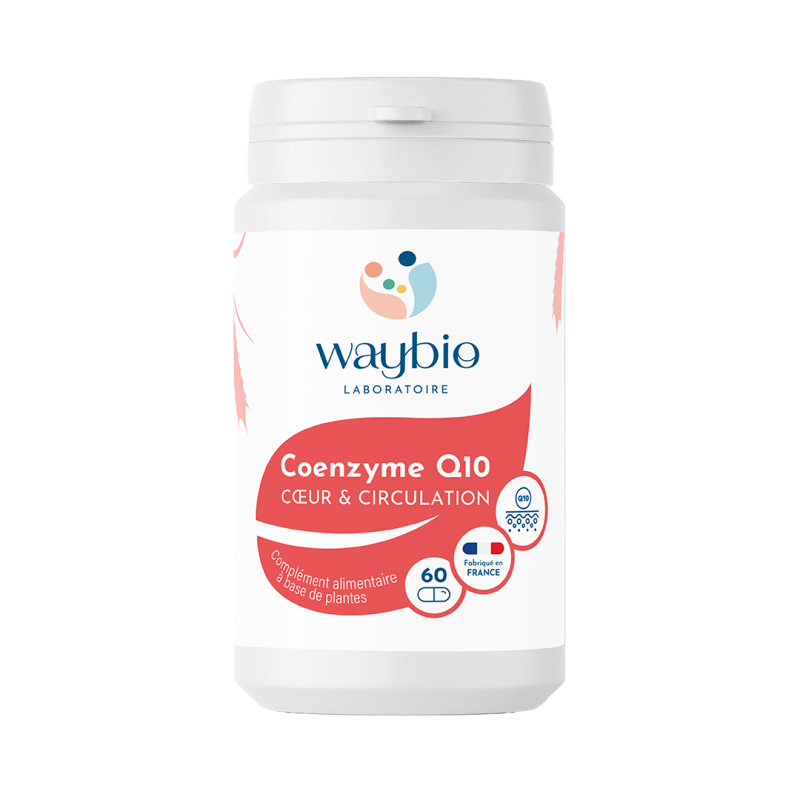
Co-enzyme Q10 provides
100 mg of ubiquinol, the reduced form of Co-enzyme Q10, combined with
selenium in the form of L-selenomethionine each day. Its format of
60 capsules provides a
30-day supply.
Naturally synthesized by the body,
Co-enzyme Q10 is a fat-soluble molecule found in cell membranes, particularly in the
mitochondria. There, it transports electrons between several complexes of the respiratory chain, an essential step in the
production of ATP, the main form of energy used by cells.
Ubiquinol is its reduced form and is also involved in
protecting lipid structures against oxidation. (
Wang et al., 2024)
Co-enzyme Q10 was
first isolated in 1957 from heart muscle mitochondria. The term “ubiquinone” reflects its widespread presence throughout the body. CoQ10 concentrations may
decrease in certain tissues with age, which explains the nutritional interest in this molecule for adults. (
Staiano et al., 2023)
Available clinical data mainly support its value in
helping manage fatigue. A
meta-analysis combining 13 randomized trials and 1,126 participants observed an
overall improvement in fatigue scores compared with placebo. (
Tsai et al., 2022)
Selenium complements this action through a different mechanism. As a component of several selenoproteins, including
glutathione peroxidases and thioredoxin reductases, it contributes to
enzymatic cellular defense systems. At the recommended daily dose, the product provides
55 µg of selenium, equivalent to 100% of the NRV. Selenium contributes to
protecting cells against oxidative stress, the
normal function of the immune system and
normal thyroid function. (
European Commission)
A
meta-analysis of 34 randomized trials involving 2,012 adults also associated CoQ10 supplementation with an
increase in total antioxidant capacity and a
decrease in malondialdehyde, a marker of lipid oxidation. Results were particularly favorable in the range of
100 to 150 mg per day. (
Dai et al., 2022)
In relation to vascular function, an
Italian trial involving 48 adults with moderate dyslipidemia and impaired endothelial function reported, after
eight weeks, an
improvement in brachial artery dilation with 100 mg of ubiquinol per day. This targeted result suggests an interest for endothelial function, without being directly generalizable to the entire population. (
Sabbatinelli et al., 2020)
Kaneka raw material is obtained through
yeast biofermentation. The product uses
334 mg of this preparation standardized to 30% to deliver
100 mg of ubiquinol. As CoQ10 is
fat-soluble, its absorption depends in particular on the formulation and food intake, which supports
taking the capsules during meals. (
Mantle and Dybring, 2020)
Who is this product for? • Adults going through a period of
mild fatigue or sustained mental demands.
• People looking for
targeted support for cellular vitality without using a stimulating ingredient.
•
Adults as they age who wish to complement their Co-enzyme Q10 intake.
• People who wish to increase their
selenium intake and daily antioxidant protection.
• People following a
vegetarian or vegan diet, as the product is suitable for these dietary patterns.
Formula synergyThe most relevant combination is that of
ubiquinol and selenium:
Ubiquinol is the main active ingredient for vitality. It participates in
electron transfer within the mitochondria and contributes to the
antioxidant balance of lipid membranes.
Selenium acts through enzymatic systems, including glutathione peroxidases. It is the ingredient that carries the authorized claim of
protecting cells against oxidative stress.
Their complementarity is therefore based on
two levels of physiological action:
energy exchange and redox balance at mitochondrial level for ubiquinol, followed by
selenium-dependent enzymatic defenses.
Wheat germ is not associated with any standardized active ingredient or specific function in the manufacturer’s information; no specific benefit is therefore attributed to it here.
Co-enzyme Q10 combines 100 mg of Kaneka ubiquinol, the reduced form of CoQ10 involved in mitochondrial energy exchange, with
55 µg of selenium. Ubiquinol supports
cellular vitality, while selenium helps
protect cells against oxidative stress: two complementary mechanisms to
support energy and antioxidant balance every day.
What science saysJapanese researchers investigated whether ubiquinol could support
healthy adults experiencing mild fatigue in their daily lives.
The trial,
published in 2020, was conducted by teams from
Osaka City University and RIKEN in Japan. It was a
randomized, double-blind, placebo-controlled study.
A total of
71 adults aged 20 to 64 were selected from 104 candidates. All had experienced
daily fatigue for more than one month but less than six months, without chronic fatigue syndrome. After the withdrawals and exclusions specified by the protocol,
62 participants were included in the final analysis:
•
20 people in the placebo group;
•
20 people receiving 100 mg of ubiquinol per day;
•
22 people receiving 150 mg per day.
Ubiquinol was presented as
soft capsules containing 50 mg each. Participants took
three capsules at once after breakfast for 12 weeks. The 100 mg group received two active capsules and one placebo capsule; the placebo contained rapeseed oil instead of ubiquinol.
The researchers assessed
fatigue, drowsiness, motivation and relaxation before and after several cognitive exercises. They also measured blood ubiquinol concentration, various biological markers and certain parameters of the autonomic nervous system.
In the 100 mg group, the average serum ubiquinol concentration increased from
1.00 to 2.96 µg/ml after four weeks, compared with a change from
0.96 to 0.82 µg/ml with placebo. It remained
significantly higher than with placebo throughout the 12 weeks.
After four weeks, the change in perceived fatigue score following the cognitive tasks was
−14.1 points in the 100 mg group, compared with +5.4 points with placebo, a statistically significant difference. Drowsiness after the exercises also decreased slightly in the ubiquinol group, with a change of
−0.8 points, while it increased by
+11.9 points with placebo.
This study therefore shows that
100 mg of ubiquinol per day can markedly increase its blood level and
support certain aspects of fatigue felt after mental exertion.





 Heart and circulation
.png) Expertise based on experience and science
Expertise based on experience and science.png) Certified products
Certified products The best of nature