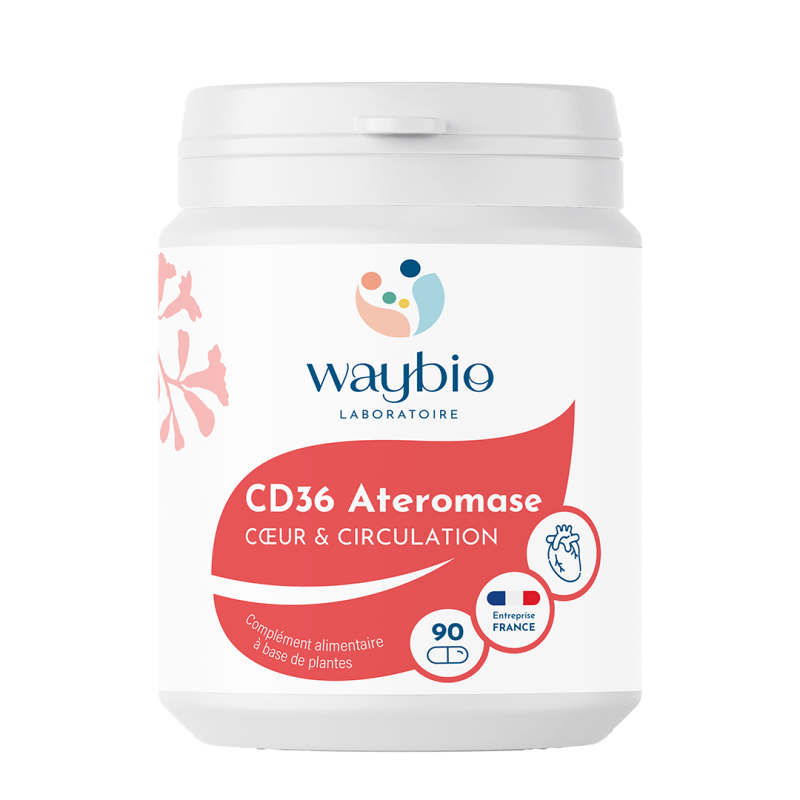
CD36 Ateromase is based on a combination of
two complementary forms of lapacho:
1,160 mg of bark powder and 40 mg of Tabetin® extract per four capsules. The powder provides the bark’s plant matrix, while the extract is the
concentrated, targeted fraction of the formula.
A formula focused on lipid and vascular balanceCholesterol is transported in the blood by various particles, including
LDL. These fulfil an essential function, but when retained in the arterial wall and modified by oxidation, they can trigger a local reaction.
Macrophages, cells responsible for recognising and eliminating certain unwanted elements, notably capture
oxidised LDL through receptors such as CD36. When this uptake becomes excessive, macrophages gradually accumulate lipids. They can then sustain the production of inflammatory messengers within the vascular wall.
CD36 is therefore not something to be eliminated: it is a
useful physiological receptor. The aim of this formula is instead to support the
regulation of its activity when cells are exposed to a large amount of modified lipids. This positioning makes CD36 Ateromase a supplement for people attentive to their
circulation and the maintenance of a balanced vascular environment.
Tabetin®, the concentrated fraction of the formulaTabetin® is an extract of
Handroanthus impetiginosus described by the manufacturer as
patented, concentrated and standardised. It is the active ingredient mainly associated with the formula’s positioning on the
CD36 receptor.
This pathway acts at two complementary levels:
•
recognition and entry of modified LDL into certain cells;
• activation of cellular relays, including
NF-κB, which govern the production of several inflammatory messengers.
By supporting modulation of this pathway, the extract forms part of an approach to
supporting lipid and inflammatory balance at vascular level.
Bark powder to preserve the plant matrixThe formula also provides
1,160 mg of lapacho bark powder per four capsules. A plant powder is obtained by drying and then grinding the raw material. Unlike an extract, it
retains a broader matrix without selectively concentrating a particular family of constituents.
Handroanthus impetiginosus bark is known to contain various families of plant substances, including
naphthoquinones such as lapachol and beta-lapachone, as well as
phenolic compounds, flavonoids and other secondary constituents. These molecules are notably studied for their interaction with oxidation phenomena and cellular signalling pathways.
The bark powder therefore complements the targeted action of the extract by providing the
lapacho phytocomplex.
Bark from the South American traditionLapacho is a tree in the
Bignoniaceae family, now recognised under the botanical name
Handroanthus impetiginosus. It has also been referred to in the literature as
Tabebuia impetiginosa and
Tabebuia avellanedae.
Native to an area extending from
central Mexico to tropical South America, it is also known as
pau d’arco, taheebo, ipê-roxo or red lapacho. Its inner bark is traditionally prepared as a decoction in several regions of South America. The biomedical literature dates the first documented mentions of its use to the late 19th century.
In CD36 Ateromase, this traditional botanical material is offered in a
modern, precisely dosed form combining bark powder and concentrated extract.
The formula’s distinctive features •
Two forms of lapacho combined in a single serving.
•
1,160 mg of bark powder per four capsules.
•
40 mg of concentrated Tabetin® extract per four capsules.
• Specific positioning around the
CD36 receptor and modified lipids.
•
Vegetable capsules suitable for vegetarian and vegan diets.
• A formula
free from active ingredients of animal origin.
Who is this product for?CD36 Ateromase may be particularly suitable for:
• people wishing to support their
circulatory comfort through a botanical approach;
• people attentive to maintaining their
vascular and lipid balance;
• during periods when
lifestyle, sedentary habits or an unbalanced diet lead to particular attention being paid to circulation;
• those looking for a formula combining
a whole plant powder with a concentrated extract;
•
vegetarians and vegans.
What does the science say?The publication most directly related to the positioning of CD36 Ateromase concerns the influence of a
Handroanthus impetiginosus extract on the
CD36 receptor.
This is not a clinical trial, but research on human cells enabling precise exploration of the mechanism highlighted.
The objectiveThe researchers wanted to determine whether an extract of
Handroanthus impetiginosus could influence:
• the
production of inflammatory messengers;
•
activation of NF-κB, a relay that controls several inflammatory reactions;
•
expression of the CD36 receptor;
• the entry into macrophages of
cholesterol from modified LDL.
The procedureThe work was conducted in Italy by
university teams from Padua and Parma. Published online in 2023, it appeared in an issue of the journal
Natural Product Research in 2024.
No volunteers took part: the researchers used
human THP-1 cells, a model of monocytes that can be transformed into macrophage-like cells.
The cells received different concentrations of a
Handroanthus impetiginosus extract, up to
200 µg/mL. They were compared with untreated control cells.
The observed resultsEven at the maximum concentration of
200 µg/mL, the extract
did not reduce cell viability under the experimental conditions.
The researchers then observed:
• a
decrease in several pro-inflammatory messengers;
•
migration of NF-κB into the cell nucleus;
• a
progressive reduction in CD36 expression, at both messenger RNA and protein levels;
• a
decrease in the uptake of cholesterol from modified LDL.
These results provide a
coherent biological explanation for positioning a lapacho extract around CD36, modified lipids and the associated inflammatory signals.
Full reference: Rossi I, Barollo S, Bertazza L, Mondin A, Pedron MC, Marodin G, Lupo MG, Palumbo M, Adorni MP, Mian C, Pezzani R, Ferri N. “Effects of
Handroanthus impetiginosus (Mart. ex DC.) Mattos extract on inflammatory, immune, atherogenic profile and differentiation in THP-1 cell line.”
Natural Product Research. 2024;38(19):3411-3416. Electronic publication: 2023.
DOI 10.1080/14786419.2023.2244125 —
PubMed PMID 37548308.





 Heart and circulation
.png) Expertise based on experience and science
Expertise based on experience and science.png) Certified products
Certified products The best of nature