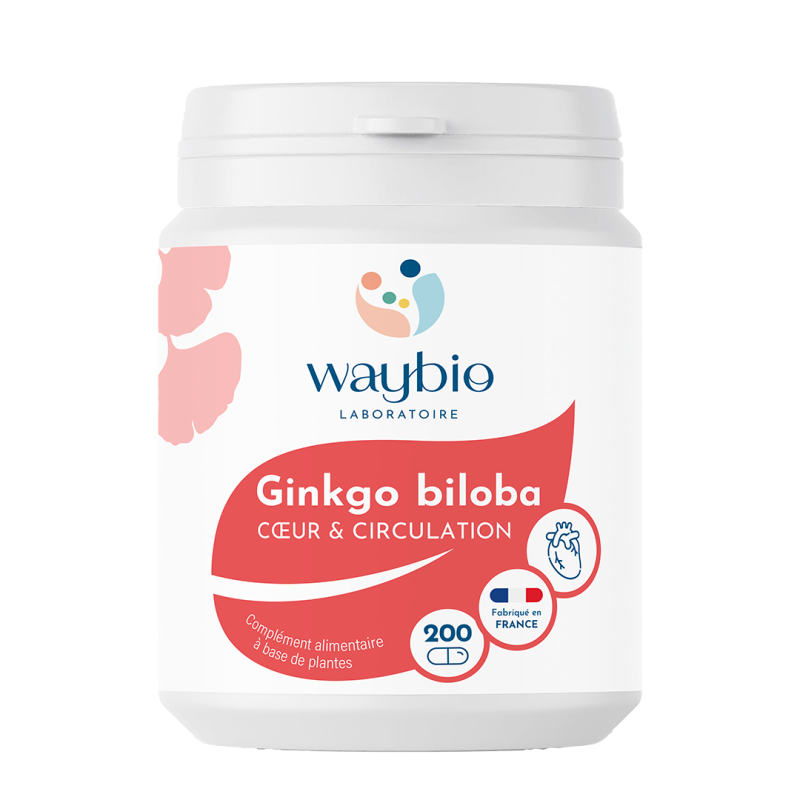
A plant-based formula centred on ginkgo leafOrganic Ginkgo biloba provides up to
1,200 mg of leaf powder per day, divided among
six vegetable capsules. The whole leaf is used,
with no extraction or concentration process stated by the manufacturer.
Ginkgo is mainly sought after for its effect on
vascular function and blood circulation. This effect is particularly valuable for the
small blood vessels that enable exchanges between the blood and tissues. Effective microcirculation facilitates
the delivery of oxygen and nutrients, while helping eliminate carbon dioxide and waste produced by cells.
Cerebral circulation and mental alertnessNerve cells have
high energy requirements. They depend on a regular supply of
oxygen and glucose to produce the energy needed to transmit nerve signals, form memories and maintain attention.
By supporting
circulation and vascular function, ginkgo helps maintain physiological conditions favourable to brain function. It may therefore be relevant during
periods of sustained intellectual activity, when
concentration, working memory and mental responsiveness are under heavy demand.
Its circulatory action also concerns the
extremities and lower limbs. Ginkgo therefore helps support
venous circulation in the legs and may benefit people looking for greater lightness and circulatory comfort.
Flavonoids supporting vascular balanceGinkgo leaf naturally contains
flavonoids, notably derivatives of
quercetin, kaempferol and isorhamnetin. These plant compounds have antioxidant properties and contribute to
protecting cellular structures against oxidation reactions.
During energy production, cells naturally generate reactive molecules. When these become too numerous, they can alter the
lipids in cell membranes, notably in blood vessels and nervous tissue. Flavonoids help limit these reactions and therefore contribute to
preserving cell integrity.
They are also involved in
endothelial balance. The endothelium is the thin layer of cells lining the inside of blood vessels. It contributes to the production of
nitric oxide, a messenger that helps small blood vessels adjust their diameter. This mechanism promotes
more flexible circulation and an appropriate distribution of blood throughout the tissues.
Ginkgolides and bilobalide: ginkgo’s terpene lactonesThe leaf also contains
terpene lactones characteristic of the species:
ginkgolides and bilobalide.
Ginkgolides notably interact with
platelet-activating factor, a messenger involved in platelet activation and certain vascular reactions. This property helps explain the value of ginkgo for
microcirculation, as well as the
precautions requested by the manufacturer for people taking anticoagulant treatment.
Bilobalide is mainly studied for its role in the
energy metabolism of nerve cells. It supports the function of
mitochondria, structures that convert nutrients into ATP, the form of energy that cells can use directly. This energy is essential for the
transmission of nerve signals, the release of neurotransmitters and the mechanisms involved in learning.
An organic whole-leaf powderThis formula uses
leaf powder rather than a concentrated extract. This form provides the
plant matrix naturally present in the dried leaf.
According to the manufacturer, the ginkgo used is
organically grown and associated with the Ecocert label. No more detailed production process is provided. In general, ginkgo powder is made from
dried and then finely ground leaves.
A tree with an exceptional historyNative to
China,
Ginkgo biloba is the
last living representative of a group of trees that appeared long before modern flowering plants. Because its fossils are very similar to the present-day species, it is often described as a
“living fossil”.
The tree, recognisable by its
fan-shaped leaves, has long held cultural importance in Asia. It was described in Europe at the end of the 17th century, then introduced to the continent during the 18th century. The modern use of preparations made from its leaves developed particularly in Europe during the 20th century.
Who is this product for? • Adults wishing to naturally support their
vascular function and circulation.
• People seeking support for
venous circulation in the legs.
• People going through a period of
sustained intellectual work or placing heavy demands on their concentration.
•
Adults as they grow older who wish to support their memory and mental agility as part of a healthy lifestyle.
• Consumers who prefer a
single-active-ingredient formula made with organic leaf powder rather than a blend of several plants.
Restrictions concerning
anticoagulant or antidepressant treatments, as well as pregnancy and breastfeeding, must be observed.
What does the science say?A controlled trial on memory in adults aged 60 and overIn
2002, a university team based in Virginia, United States, assessed whether a
standardised ginkgo extract could affect certain memory abilities in older adults without significant cognitive impairment.
The trial involved
262 men and women aged at least 60, living at home and with neither dementia nor significant neurocognitive impairment. All had achieved an
MMSE test score of at least 26, consistent with preserved cognitive function.
Participants were randomly divided into two groups:
• 131 people received
180 mg per day of standardised EGb 761 extract;
• 131 people received an
identical placebo;
• supplementation lasted
six weeks;
• neither the participants nor the assessors knew which product was being administered.
The researchers used several tests covering
verbal memory, visual recognition, information-processing speed and various cognitive abilities.
Compared with placebo, the ginkgo group showed a greater improvement in:
•
free recall of verbal information after a 30-minute delay, with
p < 0.04;
•
delayed recognition of this verbal information, with
p < 0.01;
•
delayed recognition of faces, with
p < 0.025.
A greater number of participants receiving ginkgo felt that their memory had improved, with a result at the threshold of statistical significance (
p = 0.05).
This trial indicates that a
standardised ginkgo extract taken for six weeks can support several aspects of
delayed memory in older adults.
Full reference: Mix JA, Crews WD Jr.
A double-blind, placebo-controlled, randomized trial of Ginkgo biloba extract EGb 761 in a sample of cognitively intact older adults: neuropsychological findings. Human Psychopharmacology: Clinical and Experimental. 2002;17(6):267-277. DOI:
10.1002/hup.412 —
PubMed PMID 12404671.





 Heart and circulation
.png) Expertise based on experience and science
Expertise based on experience and science.png) Certified products
Certified products The best of nature