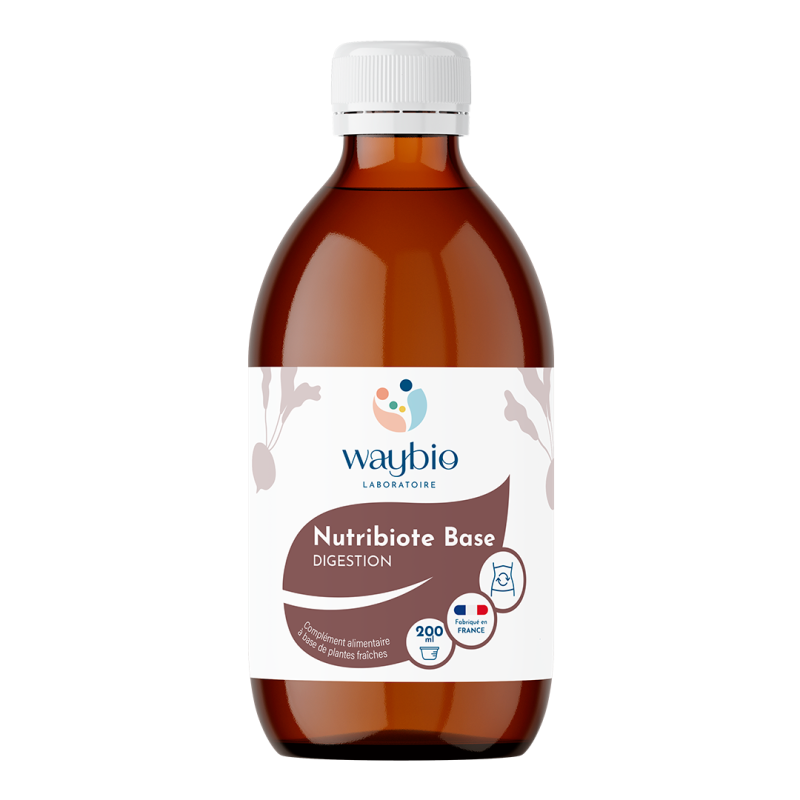
Nutribiote base offers a
concentrated liquid formula for periods of
fatigue, reduced vitality or significant nervous strain. Its daily dose of
10 ml provides
6 g of fermented beetroot extract, 357 mg of magnesium, three B vitamins, manganese and four amino acids.
The formula stands out above all for its
high magnesium content, covering 95% of the nutrient reference value.
Vitamins B1, B6 and B8, as well as manganese, each provide
50% of their reference value.
Magnesium, the main active ingredient against fatigueAt
357 mg per daily dose,
magnesium is the main active ingredient in Nutribiote base. This mineral is involved in several hundred reactions in the body.
In particular, it is essential for
using ATP, the molecule that provides energy directly usable by cells. In the body, ATP mainly functions when associated with magnesium. Magnesium therefore contributes to the
conversion of energy from food into energy available to muscles, the brain and other tissues.
Magnesium is also involved in the movement of
calcium and potassium across cell membranes. These exchanges enable nerve cells to transmit their messages and muscle fibres to contract and then relax normally.
Through these functions, magnesium contributes to:
•
reducing tiredness and fatigue;
•
normal energy-yielding metabolism;
• the
normal function of the nervous system;
•
normal psychological function;
•
normal muscle function;
•
electrolyte balance.
We use a
highly bioavailable form of magnesium as part of our
PIANTO production process.
Three B vitamins to use nutrients effectivelyB vitamins do not directly provide calories. However, they enable enzymes to
convert carbohydrates, lipids, proteins and amino acids into molecules the body can use.
Vitamin B1, or thiamine, is provided at 0.55 mg. Once activated, it helps certain enzymes feed products derived from glucose into the major energy-production pathways. It therefore contributes to
normal energy-yielding metabolism, the
function of the nervous system and
normal psychological function.
Vitamin B6, as pyridoxine, is dosed at 0.70 mg. Its active form is involved in more than one hundred enzyme reactions, particularly in the use of amino acids, proteins and glycogen. It also contributes to the
production of several nervous-system messengers and the
normal formation of red blood cells. It contributes to nervous and psychological function while helping to
reduce fatigue.
Vitamin B8, or biotin, provides 25 µg. It acts as a cofactor for enzymes involved in the use of glucose, fatty acids and certain amino acids. It contributes to
energy-yielding metabolism and the normal metabolism of macronutrients, as well as the normal function of the nervous system and psychological function.
Manganese and oxidative stressEach daily dose provides
1 mg of manganese, or 50% of the nutrient reference value.
This mineral is notably a component of
manganese superoxide dismutase, an enzyme found in mitochondria. These cellular structures produce energy but also generate reactive molecules that need to be neutralised. The manganese-dependent enzyme contributes to this
internal protection.
Manganese therefore contributes to:
•
protecting cells against oxidative stress;
•
normal energy-yielding metabolism;
• the
normal formation of connective tissue;
• the
maintenance of normal bones.
It therefore completes the formula by supporting the
protection of cells during their metabolic activities.
A fermented beetroot base using the PIANTO processThe daily dose contains
6 g of fermented beetroot extract. Beetroot forms the
plant-based, fermented matrix into which the formula’s micronutrients are incorporated.
Its manufacturer describes the
PIANTO expertise as a three-stage process:
1. beetroot fermentation;
2. cell lysis;
3. filtration and concentration.
Fermentation is an ancient method of transforming and preserving food. Microorganisms transform some of the sugars and can modify the raw material’s profile of
organic acids, amino acids and other compounds. Cell lysis is then designed to open the microbial and plant cells before the preparation is concentrated.
The formula also contains
carrot and larch fibres. These complete its plant matrix.
Four complementary amino acidsNutribiote base provides
four amino acids in precisely declared quantities.
•
Methionine — 24.8 mg: an essential amino acid used to make proteins. It also gives rise to S-adenosylmethionine, a molecule involved in many transfer reactions, as well as the pathway for synthesising cysteine and glutathione.
•
Tyrosine — 21.5 mg: an amino acid the body can produce from phenylalanine. It acts as a precursor to
dopamine, noradrenaline, adrenaline and thyroid hormones •
Lysine — 18.6 mg: an essential amino acid required to make proteins. Its residues are notably present in collagen, and it acts as a precursor in carnitine synthesis.
•
Glycine — 12.4 mg: an amino acid found in large quantities in collagen. It is also involved in the synthesis of glutathione, creatine and haem, while acting as a messenger in certain areas of the nervous system.
Distinctive features •
357 mg of magnesium, or 95% of the NRV, per daily dose.
•
50% of the NRV for vitamins B1, B6 and B8.
•
50% of the NRV for manganese.
•
6 g of fermented beetroot extract.
•
Four precisely dosed amino acids.
•
PIANTO production combining fermentation, lysis and concentration.
•
Liquid form to be diluted in the drink of your choice.
• Formula suitable for
vegetarian and vegan diets.
•
200 ml bottle corresponding to 20 daily doses.
Who is this product for?Nutribiote base may be particularly suitable for:
• people going through a period of
fatigue or reduced vitality;
• in cases of a
demanding pace, a significant mental load or temporary stress;
• people wishing to supplement their
intake of magnesium and B vitamins;
• when the
diet is irregular or lacks variety;
• people prone to
muscle tension associated with fatigue;
•
adults and adolescents over 12 looking for a liquid formula;
•
vegetarians and vegans.
Ingredient synergyMagnesium and B vitamins: coordinated action on energyThe combination is based on
magnesium and vitamins B1, B6 and B8.
Magnesium enables cells to
use ATP and contributes to nervous and muscle function. The B vitamins act further upstream by helping enzymes transform nutrients from food:
•
vitamin B1 contributes to glucose utilisation;
•
vitamin B6 is involved in the metabolism of glycogen, proteins and amino acids;
•
biotin supports the use of carbohydrates, lipids and proteins.
Magnesium and vitamin B6 are the two ingredients directly associated with
reducing fatigue. Magnesium is primarily responsible for this positioning because it provides
357 mg, compared with 0.70 mg of vitamin B6.
Manganese completes this combination by contributing to energy-yielding metabolism and protecting cells against oxidative stress. The amino acids enrich the nutritional matrix.
This complementarity is
physiological: several nutrients are involved at different stages of the same function.
What does the science say?Magnesium and vitamin B6 in adults under stressA
French clinical study published in 2018 examined a combination of magnesium and vitamin B6 in healthy adults with both a
high stress level and a blood magnesium concentration considered insufficient.
ObjectiveThe researchers wanted to determine whether adding vitamin B6 to magnesium supplementation could
reduce perceived stress more than magnesium used alone.
Participants and procedureThe trial was conducted at
four French centres between May 2016 and January 2017.
A total of
268 adults aged 18 to 50 were randomly divided into two groups. The main analysis included 264 participants, and
260 completed the eight weeks. Their average age was 31.6, and approximately
74% were women.
Participants had
moderate to extremely severe stress, assessed using the DASS-42 questionnaire, as well as a serum magnesium level between
0.45 and 0.85 mmol/L.
For
eight weeks, they received:
• either
300 mg of elemental magnesium as magnesium lactate, combined with 30 mg of vitamin B6;
• or
300 mg of the same magnesium without vitamin B6.
The doses were divided into
three daily intakes during meals. The trial was controlled and the investigator did not know which products had been assigned; it did not include a placebo:
the comparison group also received magnesium.
ResultsAfter eight weeks, among the
162 participants who initially had severe or extremely severe stress, the decrease reached:
•
50.1% with magnesium and vitamin B6;
•
41.3% with magnesium alone.
In this subgroup, the improvement was
3.16 points greater with the combination, representing a relative difference of
23.9% in favour of magnesium combined with vitamin B6. This difference was statistically significant:
p = 0.0203.
The trial shows that
magnesium supplementation was associated with a clear reduction in perceived stress in stressed adults with insufficient magnesium status. Adding vitamin B6 showed an advantage in the
most stressed participants.
Full reference: Pouteau E, Kabir-Ahmadi M, Noah L, Mazur A, Dye L, Hellhammer J, Pickering G, Dubray C. “Superiority of magnesium and vitamin B6 over magnesium alone on severe stress in healthy adults with low magnesemia: A randomized, single-blind clinical trial.”
PLOS ONE. 2018;13(12).
DOI 10.1371/journal.pone.0208454 —
Full article on PubMed Central —
PubMed PMID 30562392.





 Digestion
.png) Expertise based on experience and science
Expertise based on experience and science.png) Certified products
Certified products The best of nature