Comprehensive action on the intestinal environment
The intestinal mucosa forms an interface between digestive contents and the body. It relies on several levels of protection: a mucus layer, regularly renewed epithelial cells and tight junctions that control the passage of molecules between these cells. The microbiota and local immune defenses also contribute to this balance.
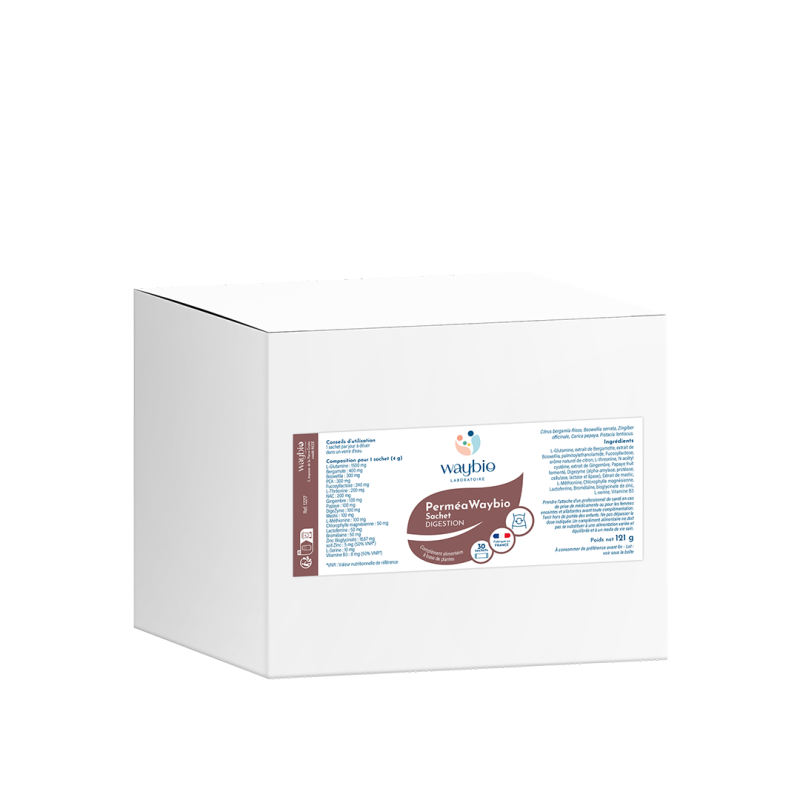
PerméaWaybio supports these different dimensions through a particularly comprehensive formula: nutritional substrates for the mucosa, antioxidant support, digestive enzymes, a fermentable oligosaccharide and plant-based active ingredients dedicated to digestive comfort.
L-glutamine, vitamin B3 and amino acids: the foundation of the mucosa
At 1,500 mg per sachet, L-glutamine is the highest-dose ingredient. This amino acid is used as an energy source by enterocytes, the cells lining the intestine. It also provides them with carbon and nitrogen to produce proteins, nucleotides and various components needed for their renewal. Glutamine therefore contributes to the function of the epithelium and the organization of proteins found in tight junctions.
Vitamin B3, at a dose of 8 mg, plays a central role in this approach. It serves as a precursor to NAD and NADP, two cofactors involved in energy production, oxidation-reduction reactions and the metabolism of carbohydrates, fats and amino acids. It contributes to the maintenance of normal mucous membranes, including those of the digestive system.
L-threonine, at 200 mg, is an essential amino acid found in particularly high amounts in mucins. These large proteins form the framework of the mucus layer covering the intestinal epithelium. L-serine, at 10 mg, also forms part of the structure of mucins and contributes to their glycosylation, the addition of sugar chains that enables them to form a protective hydrated gel.
Nutritional protection against oxidative stress
The formula combines 200 mg of NAC, 100 mg of L-methionine and 10 mg of L-serine. NAC, or N-acetyl-L-cysteine, provides cysteine, an amino acid needed for glutathione production. Methionine can also be converted into cysteine through the transsulfuration pathway, in which serine is involved. This combination therefore provides several complementary elements for cellular mechanisms that maintain the balance between oxidants and antioxidants.
Zinc, in bisglycinate form and dosed at 5 mg, completes this support. It helps protect cells against oxidative stress and contributes to DNA synthesis, protein synthesis and cell division. These functions are particularly relevant for a rapidly renewing tissue such as the intestinal epithelium. The bisglycinate form consists of zinc bound to glycine molecules.
Magnesium chlorophyll, at 50 mg, is a chlorophyll derivative containing magnesium. It complements the plant-based dimension of the formula.
Six enzymes to break down different food categories
The DigeZyme® complex, dosed at 100 mg, combines five enzymes with complementary functions:
• amylase breaks starch down into simpler carbohydrates;
• protease breaks proteins down into peptides and then amino acids;
• lipase contributes to fat breakdown;
• cellulase acts on plant cellulose, which human enzymes have difficulty digesting;
• lactase hydrolyzes lactose into glucose and galactose, supporting its digestion in people who tolerate it poorly.
Bromelain, at 50 mg, is the sixth enzyme. Naturally derived from pineapple tissues, this protease complements the action of the blend on dietary proteins.
Ginger, at 100 mg, complements this component by supporting gastric motility and the movement of digestive contents. Its characteristic constituents, including gingerols and shogaols, contribute to digestive comfort and the normal function of the digestive system.
Papaya, at 100 mg, provides a plant-based ingredient traditionally associated with digestion.
2’-fucosyllactose, lactoferrin and bergamot: the intestinal ecosystem
2’-fucosyllactose, at 240 mg, belongs to the family of human milk oligosaccharides, or HMOs. The ingredient in this formula is produced through biofermentation. It largely resists digestion in the small intestine and can reach the colon, where certain bacteria, particularly bifidobacteria, can use it as a substrate.
This microbial use can lead to the production of acetate and lactate, which are then converted by other bacteria into metabolites such as butyrate. These short-chain fatty acids contribute to acidifying the colonic environment, serve as an energy source for colon cells and participate in communication between the microbiota, mucosa and local immune system.
Lactoferrin, at 50 mg, is a protein capable of binding iron. In human physiology, it is present in various mucosal secretions and interacts with epithelial cells, microorganisms and local immune defenses. Its presence therefore complements the “mucosa and microbiota” dimension of the formula.
Bergamot extract, at 400 mg, provides a plant fraction from a citrus fruit naturally rich in polyphenolic compounds. Some polyphenols not absorbed in the small intestine are transformed by the microbiota into simpler metabolites. This interaction explains their interest as a complement to a formula targeting the intestinal environment.
Boswellia, PEA and mastic: digestive comfort and sensitivity
Boswellia extract, at 300 mg, provides the characteristic compounds of Boswellia resins, including boswellic acids. These triterpenes contribute to several signaling pathways related to the inflammatory response, including 5-lipoxygenase, NF-κB and certain cytokines. Boswellia therefore helps support the comfort and health of the gastrointestinal tract.
PEA, or palmitoylethanolamide, at 300 mg, is a lipid molecule naturally produced by the body. It contributes to the local regulation of responses to tissue stress. Its action involves the PPAR-α receptor and modulation of mast cells and certain channels involved in sensitivity. In a digestive formula, it therefore supports the regulation of neuroimmune signals associated with discomfort and visceral sensitivity.
Mastic, at 100 mg, is the aromatic resin of Pistacia lentiscus, used since ancient times in the Mediterranean basin. Its triterpenes and other resinous compounds are traditionally associated with gastric and digestive comfort.
The central synergy of the formula
The combination is based on four complementary levels:
1. L-glutamine, vitamin B3 and L-threonine provide energy, cofactors and structural elements useful to epithelial cells and mucus. Vitamin B3 carries the recognized claim concerning the maintenance of normal mucous membranes, while glutamine is the main ingredient by quantity in this component.
2. NAC, methionine, serine and zinc support cellular protection and renewal mechanisms, particularly through cysteine availability, glutathione production and protection against oxidative stress.
3. DigeZyme®, bromelain, ginger and papaya act farther upstream, supporting food breakdown and digestive transit. More complete breakdown of proteins, starches, fats and lactose limits the amount of macromolecules remaining to be processed in the lower parts of the digestive tract.
4. 2’-fucosyllactose, lactoferrin, bergamot, boswellia, PEA and mastic complement the action on the microbiota, mucosal interactions and the mechanisms responsible for digestive sensitivity.
Distinctive features
• 1,500 mg of L-glutamine per sachet;
• 5 plants, 5 amino acids or derivatives and 6 digestive enzymes;
• 240 mg of 2’-fucosyllactose produced through biofermentation;
• vitamin B3 contributing to the maintenance of normal mucous membranes;
• zinc in bisglycinate form;
• enzyme complex acting on proteins, carbohydrates, fats, cellulose and lactose;
• formula declared FODMAP-free and suitable for low-FODMAP diets;
• product suitable for vegetarian and vegan diets;
• powder in individual sachets with natural lemon flavor.
Who is this product for?
PerméaWaybio may be particularly suitable for:
• adults who wish to support the maintenance of their intestinal mucosa;
• people prone to difficult digestion or discomfort after meals;
• adults looking for simultaneous action on digestion, the microbiota and intestinal sensitivity;
• people who have difficulty digesting lactose;
• people following a low-FODMAP diet;
• periods when digestive comfort is challenged by stress, an unbalanced diet or irregular lifestyle habits.
What science says
L-glutamine and intestinal permeability
A US study published in Gut evaluated the value of L-glutamine in adults with diarrhea-predominant irritable bowel syndrome that developed after a digestive infection and was associated with increased intestinal permeability.
The trial, conducted in the United States between 2011 and 2015, was randomized, placebo-controlled and double-blind. A total of 115 adults were divided between the two groups: 59 received glutamine and 56 placebo. 106 participants completed the eight-week follow-up, 54 in the glutamine group and 52 in the placebo group. Their average age was 31.7, and 70% were women.
Participants consumed:
• 5 g of powdered L-glutamine three times per day, totaling 15 g per day;
• or 5 g of whey protein three times per day as placebo;
• for 8 weeks, with each dose mixed in approximately 240 ml of water.
The primary endpoint was a decrease of at least 50 points in the IBS-SS severity score. This result was achieved by 79.6% of participants taking glutamine, compared with 5.8% taking placebo, a frequency approximately 14 times higher.
At the end of the intervention:
• the mean IBS-SS score was 181.4 with glutamine compared with 296.1 with placebo;
• the average stool frequency was 2.91 compared with 5.26 per day;
• the Bristol score was 3.88 compared with 6.57;
• the urinary lactulose/mannitol ratio used to assess intestinal permeability was 0.05 compared with 0.10.
Permeability normalized in the glutamine group, but not in the placebo group. Adverse effects were infrequent and comparable between the groups, with no serious events reported.





 Digestion
.png) Expertise based on experience and science
Expertise based on experience and science.png) Certified products
Certified products The best of nature