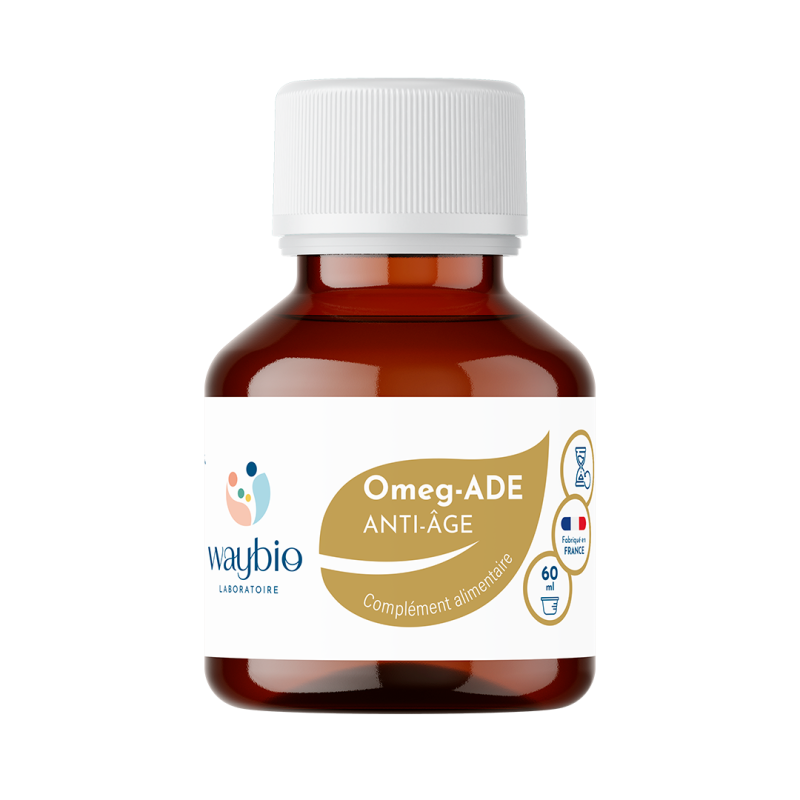
Omeg-ADE combines
marine omega-3s and fat-soluble vitamins in an easy-to-dose liquid format. The daily intake of
24 drops provides
1,080 mg of fish oil, including 329 mg of EPA and 257 mg of DHA, for a total of 586 mg of EPA and DHA. It also provides
300 µg of vitamin A, 5 µg of vitamin D3 and 7 mg of vitamin E.
EPA and DHA: at the heart of the formulaEPA and DHA are long-chain omega-3s naturally found in oily fish. The body can make them from alpha-linolenic acid, but this conversion remains limited, particularly for DHA. Food therefore remains an
important source of these two fatty acids.
Once absorbed, EPA and DHA notably become part of the
membranes surrounding cells. In the heart, these membranes participate in electrical exchanges and the passage of sodium, potassium and calcium, which are essential for the
regular contraction of the heart muscle. Omega-3s also serve as a starting point for the production of various lipid messengers involved in the
physiological balance of cardiovascular tissues.
The daily dose of Omeg-ADE provides
586 mg of EPA and DHA. It therefore exceeds the
250 mg per day needed to benefit from the European claim that
EPA and DHA contribute to normal heart function. It also meets the ANSES nutritional reference values of
250 mg of EPA and 250 mg of DHA per day for an adult consuming approximately 2,000 kcal.
DHA: brain and visionDHA has a particularly structural function. It is abundant in
neuronal membranes, where its flexibility facilitates the function of proteins responsible for receiving and transmitting nerve signals. It therefore contributes to the
maintenance of normal brain function.
The retina also contains a large amount of DHA. In the outer segments of
photoreceptors, the specialised cells that capture light, it can account for more than half of the fatty acid chains found in certain phospholipids. This abundance helps keep the membranes flexible enough for the pigments and proteins involved in vision to function correctly. With
257 mg of DHA per day, Omeg-ADE reaches the 250 mg threshold associated with
maintaining normal vision and brain function.
Vitamin A: light perception and tissue integrityThe formula provides
300 µg of vitamin A, or 37.5% of the nutrient reference values stated by the manufacturer. In the eye, a form derived from this vitamin is part of the
visual pigment used by the retina to convert light into a nerve signal. It therefore complements the structural role of DHA through direct involvement in the visual mechanism.
Vitamin A also contributes to
cell renewal and specialisation. It contributes to the
maintenance of normal skin and mucous membranes, as well as the
normal function of the immune system.
Vitamin D3: bones, muscles and immune defencesEach daily dose provides
5 µg of vitamin D3 as cholecalciferol, or 100% of the nutrient reference values.
After being processed by the body, vitamin D acts as a messenger that helps intestinal cells
absorb and use calcium and phosphorus. It therefore contributes to
maintaining normal bones and teeth. It is also involved in calcium movements within muscle cells, a mechanism required for their contraction.
Vitamin D receptors are also present in many immune cells. This vitamin therefore contributes to the
normal function of the immune system, complementing the role of vitamin A in the tissues that form the body’s first barriers.
Vitamin E: protection of cell membranesThe formula contains
7 mg of vitamin E as tocopheryl acetate, or 58% of the nutrient reference values stated by the manufacturer.
Vitamin E is found in the fatty structures of cells. It helps
interrupt chain reactions caused by an excess of oxidising compounds, which could otherwise alter membrane lipids. Its presence is particularly consistent in a formula rich in
polyunsaturated fatty acids such as EPA and DHA. Its established regulatory benefit remains the
protection of cells against oxidative stress.
Marine oil protected against oxidationThe oil comes from
wild sardines, anchovies and mackerel. These small oily fish are
natural sources of EPA and DHA.
The oil used is guaranteed to have a
low TOTOX value of less than 10. This indicator combines the products formed at the beginning and during the oxidation of an oil: the lower the value, the less oxidative degradation the oil has undergone. As a reference, the voluntary GOED monograph sets a
maximum of 26 for unflavoured oils.
The oil also benefits from the
patented QualitySilver® stabilisation process. According to Polaris, the owner of this technology, the process delays oxidation in omega-3-rich oils and improves their stability in standardised Rancimat tests.
Rosemary extract completes this protection directly in the product, while the
natural lemon flavour provides a more pleasant note when taken.
Who is this product for?Omeg-ADE may be particularly suitable for:
•
adults and adolescents over 10 years old who consume few sardines, mackerel, anchovies or other oily fish;
• people seeking a
measured daily intake of EPA and DHA to support normal heart function;
• those who also wish to
support the brain and vision with an intake of 257 mg of DHA;
• people interested in a formula combining
omega-3s, antioxidant protection and vitamins involved in immune, muscle and bone functions;
• people who prefer
oil drops to softgels or capsules;
• during periods when
dietary intakes of vitamin D and oily fish deserve particular attention.
Ingredient synergyEPA and DHA are the active ingredients mainly responsible for
supporting heart function. At the same time, DHA plays the main role in
maintaining the brain and vision.
For visual function,
DHA and vitamin A act at two complementary levels: DHA contributes to the
flexible structure of photoreceptor membranes, while vitamin A is part of the pigment cycle that enables these cells to capture light.
Vitamin E acts at another level by helping protect cell membranes against oxidative stress.
Rosemary extract performs a technological function: it helps preserve the oil directly in the product.
Finally,
vitamins A, D and E are fat-soluble. Their presentation in an
oil matrix and the recommended intake
during or after a meal are consistent with their mode of absorption. In humans, the presence of fat during a meal notably improves the
absorption of vitamin D3.
What does the science say?An
American clinical study published in 2010 examined DHA and certain
memory functions in people as they grow older.
The researchers recruited
485 healthy adults aged at least 55, with an average age of approximately 70. Participants reported mild age-related memory decline but did not have dementia. The trial was conducted at
19 clinical centres in the United States.
For
24 weeks, participants received,
randomly and double-blind:
• either
900 mg of microalgae-derived DHA per day;
• or
placebo capsules containing a blend of corn and soybean oils.
The main test measured
visual learning and episodic memory by asking participants to memorise associations between different shapes and their locations.
After 24 weeks, the DHA group made
significantly fewer errors than the placebo group. The adjusted difference between the groups was
1.63 errors in favour of DHA, with a 95% confidence interval ranging from 0.14 to 3.1 errors and a
p value of 0.03. Scores for
immediate and delayed verbal recognition also improved. Plasma DHA levels approximately doubled in the supplemented group.
Full reference: Yurko-Mauro K, McCarthy D, Rom D, Nelson EB, Ryan AS, Blackwell A, Salem N Jr, Stedman M; MIDAS Investigators.
Beneficial effects of docosahexaenoic acid on cognition in age-related cognitive decline.
Alzheimer’s & Dementia. 2010;6(6):456-464. DOI:
10.1016/j.jalz.2010.01.013 —
PubMed.





 Anti-aging
.png) Expertise based on experience and science
Expertise based on experience and science.png) Certified products
Certified products The best of nature