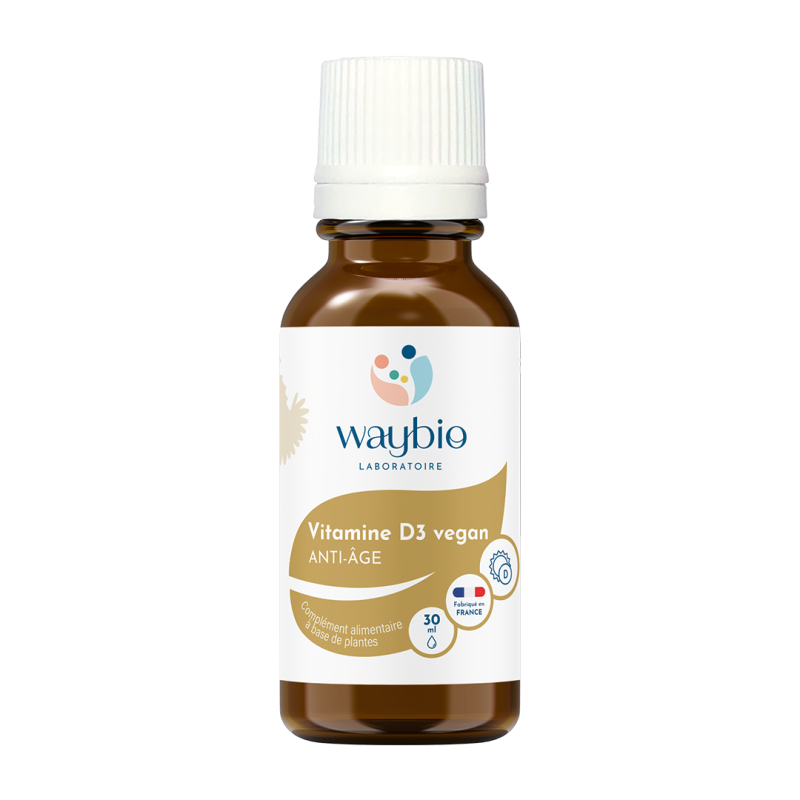
Our oil-based formula provides, in
2 drops,
50 µg of vitamin D3 as cholecalciferol, equivalent to 2,000 IU and 1,000% of the nutrient reference values. Here, the vitamin D3 comes from
boreal lichen, a
non-animal source suited to people who wish to avoid vitamin D traditionally derived from animal-based raw materials.
Calcium absorption and bone strength After intestinal absorption, vitamin D3 is first converted by the liver into
25-hydroxyvitamin D, the main circulating form used to assess vitamin D status. It is then converted, mainly by the kidneys, into an active form called
calcitriol.
This active form acts as a messenger to intestinal cells. It helps them
absorb calcium and phosphorus from the diet and contributes to
maintaining a normal concentration of calcium in the blood. These minerals can then be used in the continuous renewal of bone tissue.
Through this action, vitamin D contributes to the
maintenance of normal bones and teeth. However, it does not replace the physical activity needed for bone health.
Muscle function Calcium is also involved in the contraction and relaxation of muscle fibers. By contributing to calcium balance and acting directly within muscle cells, vitamin D helps
maintain normal muscle function.
This function may be particularly relevant for
adults with little sun exposure,
older adults, or during periods when preserving muscle and bone health becomes a priority.
Immune function Immune cells have receptors that respond to vitamin D. Its active form contributes to their differentiation, activity and the balanced regulation of defense responses. Vitamin D therefore contributes to the
normal function of the immune system, without preventing or treating an infection.
It is also involved in the
process of cell division, which is essential for normal tissue renewal.
Vitamin D3 from lichen Lichen is a non-animal source of cholecalciferol. Scientific analyses confirm that lichens naturally contain
vitamin D3.
The role of milk thistle The formula also contains
5.8 mg of milk thistle as dry plant equivalent.
Milk thistle fruits naturally contain a group of compounds collectively known as
silymarin. The EMA recognizes their
traditional use for certain digestive discomforts and to support liver function.
A suitable oil-based presentation As vitamin D3 is
fat-soluble, it must be incorporated into a fat phase before being absorbed in the intestine.
Rapeseed oil serves here as a technological carrier and keeps the vitamin in an oil-based form. The presence of lipids is consistent with the properties of vitamin D3.
Who is this product for? Vitamine D3 vegan may be particularly suitable for:
• adults with
low sun exposure, especially during the darker months;
• people whose diets provide
little oily fish, eggs or foods fortified with vitamin D;
• adults following a diet that excludes the main animal sources of vitamin D and looking for
D3 of non-animal origin;
• people wishing to support the
normal maintenance of their bones, teeth and muscle function;
• adults attentive to the
normal function of their immune system;
• older adults, in whom
vitamin D synthesis in the skin becomes less efficient.
Age, season, latitude, skin pigmentation, clothing and the level of UVB exposure can influence the skin’s production of vitamin D.
The combination of ingredients Vitamin D3 is the active ingredient primarily responsible for the claimed benefits. Its most relevant combination is with the
oil-based carrier:
•
vitamin D3 contributes to calcium and phosphorus utilization, bones, muscles and immunity;
•
rapeseed oil provides a suitable medium for dispersing this fat-soluble vitamin;
•
milk thistle provides a botanical complement.
What science says A
clinical study published in 2018 examined the effects of a daily intake of
2,000 IU of cholecalciferol, the amount provided by 2 drops of Vitamine D3 vegan.
The trial was conducted in Shanghai, China, among
448 adults with vitamin D deficiency, defined as a blood concentration below
50 nmol/L. Their average age was 31.9 years and 69% were women.
For
20 weeks, the participants received either:
•
2,000 IU of vitamin D3 per day in capsule form;
• or
a placebo with a similar appearance.
The researchers measured blood vitamin D, parathyroid hormone, calcium and several markers reflecting bone turnover.
At the end of the intervention,
bone-specific alkaline phosphatase, a marker associated with bone formation, had increased by
1.7 ± 1.9 µg/L in the vitamin D3 group, compared with 1.1 ± 1.7 µg/L with placebo. The difference was
statistically significant, with a p value of 0.004.
These results show that a daily intake of
2,000 IU of vitamin D3 may affect certain
bone turnover parameters in adults with vitamin D deficiency.
Full reference: Yao P., Sun L., Xiong Q., Xu X., Li H., Lin X.
Cholecalciferol Supplementation Promotes Bone Turnover in Chinese Adults with Vitamin D Deficiency.
The Journal of Nutrition. 2018;148(5):746-751.
DOI: 10.1093/jn/nxy032 – PubMed





 Anti-aging
.png) Expertise based on experience and science
Expertise based on experience and science.png) Certified products
Certified products The best of nature