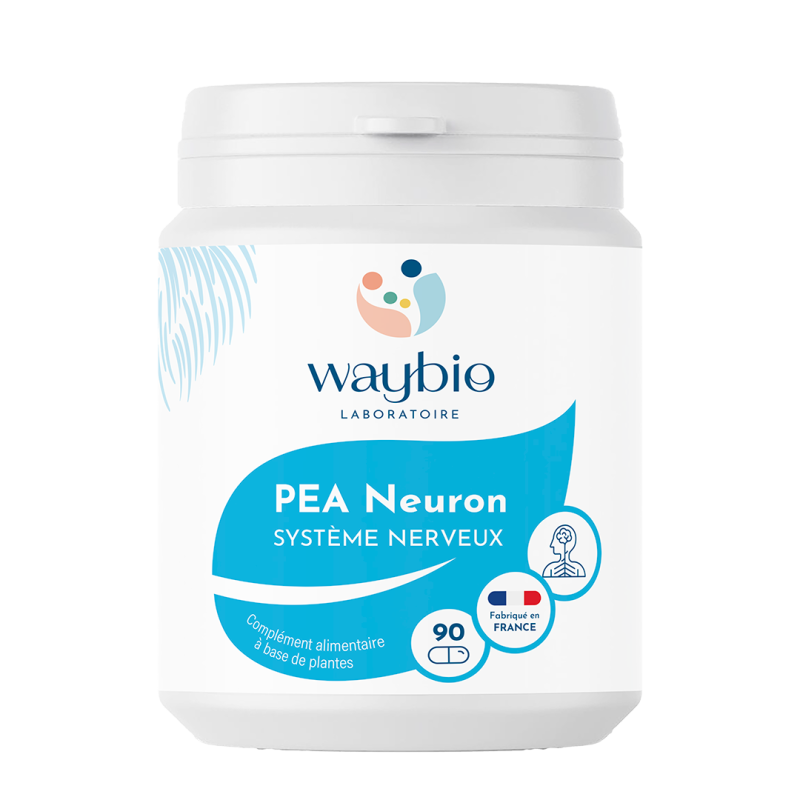
PEA Neuron combines four complementary active ingredients centered on nervous comfort and balance.
Palmitoylethanolamide, or PEA, is a lipid naturally synthesized by the body from membrane phospholipids. Identified as early as the 1950s in certain food sources, it belongs to the family of N-acylethanolamines. Research focuses in particular on its interaction with the PPAR-α receptor and its role in physiological mechanisms that regulate the inflammatory response and perception of discomfort. The formula provides 390 mg of PEA derived from olive oil per 3 capsules.
Lion’s mane, or Hericium erinaceus, is an edible mushroom traditionally used in Asia. Its fruiting body and mycelium contain various polysaccharides and specialized compounds, including hericenones and erinacines. These are being researched in relation to neuronal function and cognitive functions. Available human data are encouraging, but involve different preparations, dosages and parts of the mushroom. PEA Neuron provides 357.5 mg per maximum daily dose.
Vitamins B1 and B6 reinforce the nervous-system focus of the formula. Each is present at 100% of the NRV per 3 capsules and contributes to the normal function of the nervous system and normal energy metabolism. They also contribute to normal psychological function, while vitamin B6 helps reduce fatigue and is involved in the synthesis of neurotransmitters.
Formula synergy
PEA is the main active ingredient behind the “comfort” positioning. Lion’s mane complements this approach with a mushroom studied in the field of nervous and cognitive well-being. Vitamins B1 and B6 provide recognized nutritional support for the nervous system, energy metabolism and psychological functions.
This combination therefore supports two complementary areas: helping with sensations of discomfort through the potential of PEA and supporting normal nervous functions through vitamins B1 and B6.
Who is this product for?
PEA Neuron may be particularly suitable for:
• adults who wish to support the normal function of their nervous system;
• people experiencing recurring physical discomfort;
• periods of fatigue or intense mental demand;
• people looking for a formula combining an endogenous lipid, a mushroom and B vitamins;
• people following a vegetarian or vegan diet.
What science says
A clinical study published in 2022 evaluated a PEA formulation in adults with peripheral neuropathic pain associated with type 1 or type 2 diabetes.
Conducted in Brisbane, Australia, this single-center, randomized, placebo-controlled, quadruple-blind study included 70 participants aged 32 to 75. The final analysis included 66 people, divided equally between the two groups and mostly living with type 2 diabetes.
For 8 weeks, participants received either 600 mg of PEA per day, in the form of two 300 mg capsules using technology designed to improve its bioavailability, or placebo capsules containing maltodextrin.
On the BPI-DPN scale, scored from 0 to 10, the mean pain severity score decreased from 4.77 to 1.72 in the PEA group, a reduction of 3.06 points. In the placebo group, it decreased from 4.96 to 4.19, a reduction of 0.77 points. The difference between the groups was statistically significant from the second week and remained so after 8 weeks.
The score measuring the impact of pain on daily activities also decreased more with PEA: −1.90 points, compared with −0.39 with placebo. Improvements were also observed in several dimensions of sleep. The formulation was well tolerated, and no concerning changes in biological safety parameters were reported.
These results support the value of PEA in helping manage certain discomforts with a neuropathic component.





 Nervous system
.png) Expertise based on experience and science
Expertise based on experience and science.png) Certified products
Certified products The best of nature